
As we stand in early 2026, Tesla is no longer just a “car company.” The next ten years (2026–2036) will likely be defined by its transition into a diversified robotics and energy conglomerate. While the Model 3 and Model Y built the foundation, the next decade focuses on autonomy, humanoid labor, and the global energy grid.

1. The Autonomous Revolution: Robotaxis and the Cybercab
The most immediate shift is the move from “Supervised” to “Unsupervised” Full Self-Driving (FSD). By 2026, Tesla is already launching unsupervised services in cities like Austin and the California Bay Area, with plans to expand to Phoenix, Miami, and Las Vegas.
-
The Cybercab (2026): Production of this dedicated, pedal-less, steering-wheel-free two-seater is slated to begin in April 2026. It is designed for a high duty cycle—operating up to 60 hours a week compared to the 10 hours of a typical private car.
-
The “Robus” (2028): Following the Cybercab, expect larger autonomous transport vehicles (often called the Robovan or Robus) to handle group travel and urban logistics.
-
The Network: By 2035, analysts predict Tesla’s Robotaxi revenue could reach $250 billion, potentially capturing 50% of the autonomous ride-hailing market.
2. Optimus: The Humanoid Workforce
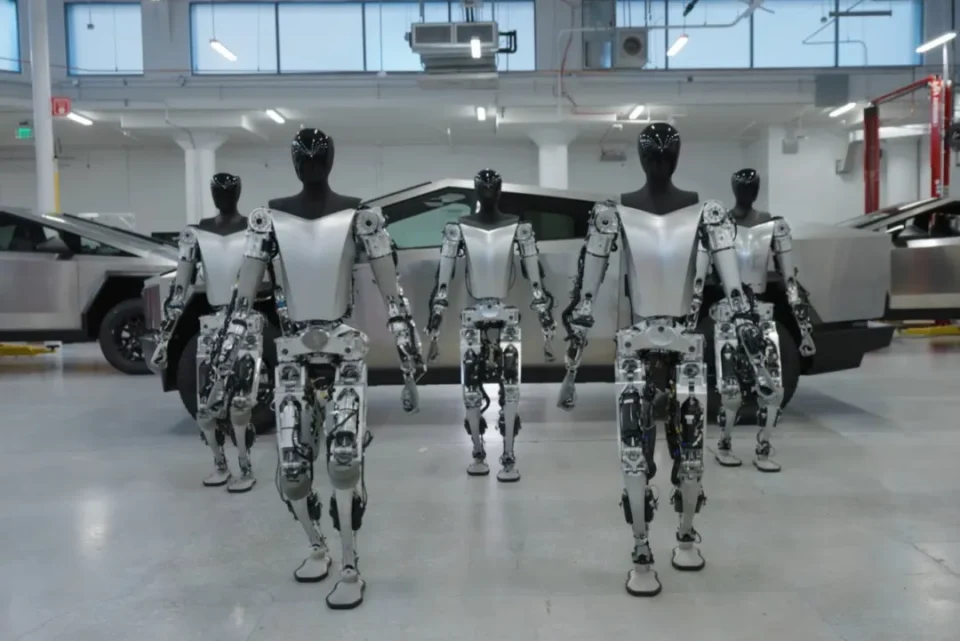
Elon Musk has famously stated that the Optimus humanoid robot could eventually be more significant than the vehicle business.
-
Internal Scaling (2026–2027): Tesla is currently installing the first production lines for Optimus Gen 3. The initial goal is to deploy thousands of units within Tesla’s own Gigafactories to handle “dangerous, repetitive, and boring” tasks.
-
Commercial Availability: External sales are anticipated to begin as early as 2027, with a long-term target price of around $30,000. If Tesla hits its ambitious goal of 10 million units annually by the late 2020s, it would fundamentally disrupt global labor economics.
3. Energy: The Hidden Empire
Often overshadowed by cars, Tesla Energy is growing faster than the automotive segment. With margins exceeding 25%, the energy business is becoming a massive pillar of stability.
-
Megapacks and the Grid: As AI data centers and global grids demand more power, Tesla’s Megapack deployments are expected to grow at an exponential rate.
-
Virtual Power Plants (VPPs): Through software like Autobidder, Tesla is turning millions of Powerwalls and EVs into a distributed energy network, allowing homeowners to sell energy back to the grid during peak demand.
4. The Product Roadmap (2026–2030)
Tesla’s vehicle lineup will expand to cover nearly every segment of transport:
| Vehicle | Expected Full Production | Impact |
| Model Y Refresh | 2026 | Maintaining dominance in the SUV market. |
| Tesla Semi | Late 2026 | Electrifying long-haul logistics with a 500-mile range. |
| Next-Gen Roadster | 2026/2027 | A “halo” car with SpaceX-inspired tech (0-60 in under 1s). |
| $25k Compact EV | 2027+ | Mass-market adoption in emerging economies. |
Challenges and Risks
The next decade is not without hurdles. Tesla faces:
-
Regulatory Barriers: Unsupervised FSD still requires state-by-state approval, which can be a slow, litigious process.
-
Competition: Chinese manufacturers (like BYD and XPeng) and established Western brands are closing the gap in EV hardware.
-
Execution Risk: Scaling a humanoid robot to millions of units is a manufacturing challenge that has never been attempted.
The Verdict: If the last decade was about proving that EVs are viable, the next decade is about proving that AI can run the physical world. Tesla is betting its $1.4 trillion valuation that it can.
Would you like me to create a more detailed breakdown of the projected financial growth of Tesla Energy versus the Automotive division?
This video provides an update on the Optimus Gen 3 timeline and how Tesla plans to integrate these robots into their manufacturing process starting in 2026.

1 comment